Source High Transmittance Clear Quartz Tube for Glass, Chemical, and Construction
Find 30 high transmittance clear quartz tube options from Chinese manufacturers. Compare specifications like 99.99% purity, ISO certifications, and custom sizes for glass, chemical, and construction applications. Request quotes for MSQT, GT-304, and other models with lead times of 7-10 days.
Key considerations
Products List




Comprehensive Sourcing Guide
High Transmittance Clear Quartz Tube Sourcing Guide
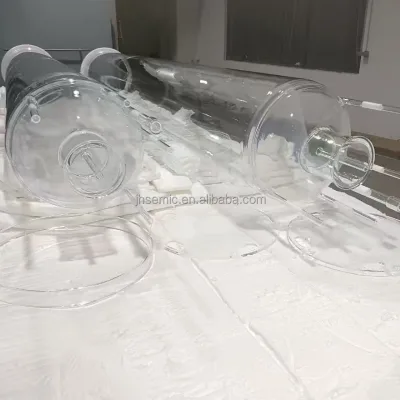
Procuring high transmittance clear quartz tubes requires careful attention to the specific application environment, as these components serve critical roles in industries ranging from glass manufacturing to chemical processing. The observed market data indicates that suppliers often list these tubes for use in casting, ceramic production, and metallurgy, where thermal stability is paramount. Buyers must distinguish between general quartz glass and specialized high-transmittance variants, ensuring the selected product matches the precise optical and thermal demands of their specific machinery or process line.
Verification of the physical dimensions and material purity is the first step in narrowing down potential suppliers, as the supplied facts highlight a range of models like MSQT and GT-304 with varying specifications. While some listings mention customized sizes and specific packing methods like wooden cases or plywood crates, the core requirement remains the 99.99% pure quartz material which ensures the necessary optical clarity. Buyers should prioritize suppliers who explicitly state their material composition and offer customization options to fit unique equipment constraints rather than relying solely on standard off-the-shelf dimensions.
Product Scope and Observed Listing Signals
The current market listings for quartz tubes reveal a diverse range of applications, including projection welding, chemical containment, and construction-related thermal processes. Observed product attributes frequently cite applications in glass, chemical, and plastic industries, suggesting that these tubes are versatile components designed to withstand harsh environments. However, the variation in listed models, such as flosted glass tubes or specific dimensions like 25*200mm, indicates that buyers must carefully match the product description to their exact operational needs to avoid compatibility issues.
Listing signals also show significant variation in packaging and origin, with products originating from Henan, Shanghai, and Jiangsu provinces, often packed in export cartons or wooden cases. This geographic diversity suggests a competitive supply chain, yet it necessitates rigorous verification of the supplier's ability to maintain consistent quality across different production sites. Buyers should look for clear indicators of the product's intended use, such as the mention of high-pressure resistance or specific working temperatures, to ensure the listed item is suitable for their specific high-transmittance requirements.
Technical Specifications to Verify
When evaluating technical specifications, the density and softening point of the quartz tube are critical parameters that directly impact performance under thermal stress. The observed data points to a density of approximately 2.2g/cm3 and a softening point around 1780°C, which are essential benchmarks for maintaining structural integrity in high-temperature applications. Buyers must verify that the specific unit they are purchasing meets these physical constants, as deviations can lead to premature failure or safety hazards in industrial settings where precise thermal control is required.
Dielectric properties and working temperature ranges further define the suitability of the tube for electrical or high-heat environments, with some listings noting a dielectric constant of 3.75 and a working temperature of 1000°C. These figures are vital for applications involving electrical insulation or sustained exposure to heat, and they must be confirmed against the supplier's technical datasheet. Additionally, the surface handling and customization options for the tube's dimensions should be scrutinized to ensure they align with the mechanical constraints of the equipment into which the tube will be installed.
Compliance and Safety Documentation
Compliance documentation is a non-negotiable aspect of sourcing high-transmittance quartz tubes, particularly when these components are used in regulated industries like chemical processing or medical equipment manufacturing. The observed listings mention certifications such as ISO and RoHS, which serve as indicators that the supplier adheres to specific quality management and environmental standards. Buyers should request valid certification documents to confirm that the product meets these requirements, ensuring that the materials used do not contain restricted substances and that the manufacturing process follows established safety protocols.
Safety documentation also extends to the physical handling and storage of the quartz tubes, as the material's brittleness and high-temperature capabilities require specific precautions. While some suppliers list features like recyclability, the primary focus should be on verifying that the product meets the necessary safety standards for its intended application, such as high-pressure resistance or chemical inertness. Buyers must ensure that the supplier provides clear instructions on handling and installation to mitigate risks associated with breakage or thermal shock during the procurement and deployment phases.
Cost Drivers and Commercial Terms
Cost drivers for high-transmittance clear quartz tubes are heavily influenced by material purity, customization requirements, and the complexity of the manufacturing process. The observed data indicates that while some suppliers offer free samples, the minimum order quantity (MOQ) can range significantly, with some listings specifying an MOQ of 1000 pieces. Buyers should anticipate that higher purity levels and custom dimensions will increase the unit cost, and they must balance these factors against their budget constraints and production volume needs.
Commercial terms such as lead time and payment conditions are equally critical, with observed lead times ranging from 7 to 10 days depending on the supplier and order complexity. The variation in lead times suggests that buyers should plan their procurement schedules carefully to avoid production delays, especially when dealing with customized orders. Additionally, the acceptance of logos and the availability of samples can influence the overall cost structure, and buyers should negotiate these terms to ensure they receive the best value without compromising on quality or delivery timelines.
Supplier Qualification and Quality Control
Supplier qualification involves a thorough assessment of the manufacturer's capabilities, including their production facilities, quality control processes, and track record in the quartz glass industry. The observed listings highlight origins in major Chinese provinces like Henan and Shanghai, which are known for their industrial manufacturing bases. Buyers should verify the supplier's ability to consistently produce high-transmittance tubes by reviewing their quality control protocols and requesting evidence of their production capacity to handle large or customized orders.
Quality control measures should include rigorous testing of the tube's optical clarity, thermal resistance, and dimensional accuracy to ensure they meet the specified standards. The presence of certifications like ISO and CE suggests that some suppliers have established quality management systems, but buyers must confirm that these certifications are current and applicable to the specific product being purchased. Regular audits and sample testing are recommended to maintain high standards and ensure that the supplier can deliver consistent quality over the long term.
Long-Term Procurement Checks
Establishing a long-term procurement relationship requires ongoing monitoring of supplier performance, including their ability to meet delivery schedules and maintain product quality over time. Buyers should implement a system for tracking key performance indicators such as lead time consistency, defect rates, and responsiveness to quality issues. This proactive approach helps identify potential problems early and allows for corrective actions before they impact production schedules or product reliability.
Regular reviews of the supplier's compliance status and technical capabilities are essential to ensure they continue to meet evolving industry standards and customer requirements. As the market for high-transmittance quartz tubes evolves, suppliers may need to adapt their processes or materials to maintain competitiveness. Buyers should maintain open communication channels with their suppliers to stay informed about any changes in technology or regulations that could affect the procurement strategy, ensuring a sustainable and reliable supply chain.
FAQs
What is the material composition of high transmittance clear quartz tube?
The material is 99.99% pure quartz glass, ensuring high optical clarity and chemical resistance. This composition supports applications in glass, chemical, and metallurgical industries. The transparent color and specific density of 2.2g/cm3 contribute to its stability under high temperatures and harsh processing conditions.
Can high transmittance clear quartz tube be customized for specific sizes?
Yes, customization is available for various sizes and standards. Products like MSQT and GT-304 offer tailored specifications to meet unique project requirements. Buyers can request specific dimensions, with lead times typically ranging from 7 to 10 days, ensuring timely delivery for specialized industrial needs.
Which certifications are associated with high transmittance clear quartz tube products?
Products often carry ISO and CE certifications, ensuring quality and safety standards. Some items also meet RoHS standards for environmental compliance. These certifications verify that the quartz tubes are suitable for sensitive applications in construction, chemical processing, and other regulated industrial sectors requiring verified material integrity.
How does the softening point affect the usage of quartz glass tubes?
The softening point of 1780°C allows the tube to withstand extreme heat without deforming. This property makes it ideal for high-temperature processes in casting, ceramic, and metallurgy. The high dielectric constant of 3.75 further ensures electrical insulation stability during intense thermal operations in industrial environments.
What are the typical packaging methods for shipping quartz glass tubes?
Packaging includes wooden cases, plywood cases, cartons, and pallets for secure transport. Export cartons combined with wooden cases are common for international shipments. These methods protect the fragile quartz glass from damage during transit, ensuring that the high transmittance and structural integrity remain intact upon arrival at the destination.
What is the minimum order quantity for high transmittance clear quartz tube?
MOQs typically range from 1 to 1000 pieces, depending on the supplier and product model. Some items specify an MOQ of 1000 PCS, while others may offer lower quantities. Buyers should check specific product listings for exact MOQ requirements, as customization and standard models may have different purchasing thresholds.